
How To Boost Brain Memory? 10 Science-Backed Tips
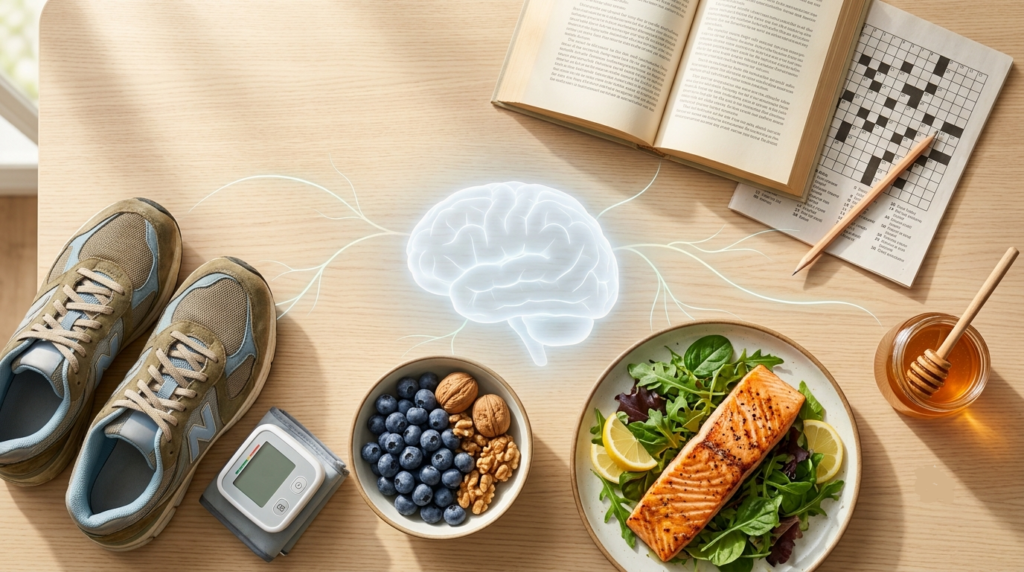
How do you boost your brain memory? The good news is that your daily habits matter more than any pill.
The 2024 Lancet Commission on dementia, published July 31, 2024, found that addressing 14 modifiable risk factors could prevent or delay about 45% of dementia cases worldwide.
Many of those factors, like blood pressure, physical activity, hearing, and social contact, are things you can work on starting today.
Here’s how to improve memory at any age, which brain foods help, and what to make of trends like brain honey.
10 Ways To Improve Memory
These ten healthy habits cover both quick wins for daily memory and long-term brain health.
- Move Your Body: Exercise is one of the best-studied ways to sharpen your memory. In a well-known 2011 trial, 120 sedentary older adults walked for 40 minutes three times a week. After a year, their hippocampus, the brain’s main memory center, grew about 2%, while a stretching-only group saw it shrink. That growth effectively turned back one to two years of age-related loss, and memory scores improved too.
- Protect Your Sleep: Your brain sorts and stores new memories while you sleep. Regular, adequate sleep helps you hold on to what you learned during the day, while short or broken sleep makes focus and recall harder.
- Use Active Study Techniques: If you want to know how to increase memory power, change how you study. Testing yourself beats rereading, and spreading review sessions over several days beats cramming. Explaining ideas in your own words, or teaching them to someone, makes them stick.
- Eat Brain Foods: A diet rich in leafy greens, berries, fish, nuts, beans, and olive oil supports brain health. We cover the research on brain foods for memory below.
- Keep Your Blood Pressure in Check: High blood pressure in midlife is one of the 14 risk factors named by the 2024 Lancet Commission, which recommends actively treating it in midlife and beyond. Regular checks matter, since high blood pressure usually has no symptoms.
- Stay Social: Social isolation is another Lancet Commission risk factor. Regular conversation, group activities, and volunteering all give your brain a workout.
- Treat Hearing and Vision Loss: Untreated hearing loss and vision loss are both on the Lancet list. Hearing aids and eye care aren’t just about comfort; they help keep your brain engaged with the world.
- Keep Learning: The Lancet Commission lists lower education as a risk factor, and Dementia Australia notes that mentally stimulating activities help even in later life. Learn a language, take up an instrument, or try a new hobby.
- Manage Stress and Mood: Depression is a Lancet risk factor, and ongoing stress makes it harder to focus and remember. Exercise, time outdoors, and talking to a professional all help.
- Limit Alcohol and Don’t Smoke: Excessive drinking and smoking both appear on the Lancet list. Cutting back protects your brain along with your heart and lungs.
How Can You Improve Focus & Memory Together?
Focus and memory work hand in hand. When you’re distracted, your brain may not process information deeply enough to store it effectively.

Improving your ability to concentrate can make it easier to learn new information and recall it later.
Try these practical strategies to strengthen both skills:
- Focus on one task at a time: Avoid multitasking when studying, reading, or working on something important. Give your attention to one activity before moving to the next.
- Silence phone notifications: Put your phone on silent or out of reach to reduce interruptions and help you stay focused.
- Take short breaks: Step away from demanding tasks periodically to manage mental fatigue and return with better concentration.
- Get enough sleep: Sleep helps your brain process and consolidate newly learned information. Keep a consistent sleep schedule whenever possible.
- Use active recall: After reading or studying, close your notes and try to explain what you remember. This helps you practice retrieving information rather than simply rereading it.
- Practice regularly: Short, consistent study or focus sessions can help you build sustainable habits over time.
Better memory starts with paying attention to information in the first place. Combine fewer distractions, effective learning techniques, regular breaks, and adequate sleep to support both focus and recall. For more simple memory improvement tips, see our full article.
Brain Food for Memory: What the Research Shows?
The best-known eating plan for brain health is the MIND diet, short for Mediterranean-DASH Intervention for Neurodegenerative Delay.
Researchers at Rush University Medical Center designed it by blending two heart-healthy diets.
In a 2015 study of 923 older adults, people who followed the MIND diet most closely had up to a 53% lower risk of Alzheimer’s disease, and even moderate followers saw about a 35% lower risk.
That study was observational, though, so it couldn’t prove cause and effect. A 2023 randomized trial in the New England Journal of Medicine tested it in 604 older adults: both the MIND group and a comparison diet group improved, but MIND didn’t clearly outperform the other healthy diet.
The likely takeaway is that eating well in general helps, not that one magic food does.
What Are The Best Foods For Brain Health?
Your diet can help support brain health, and the MIND diet offers a practical guide to foods worth including in your daily routine.
It combines elements of the Mediterranean and DASH diets, emphasizing vegetables, berries, nuts, whole grains, beans, and healthy fats.
The table below summarizes the key foods and recommended frequencies associated with the MIND diet.
| Brain-Healthy Food | Recommended Frequency | Why It Matters |
|---|---|---|
| Leafy green vegetables | At least 6 servings per week | Provide nutrients associated with a healthy dietary pattern |
| Other vegetables | At least 1 serving daily | Add variety and essential nutrients |
| Berries | At least 2 servings per week | Supply antioxidants and other beneficial plant compounds |
| Nuts | At least 5 servings per week | Provide healthy fats, fiber, and other nutrients |
| Beans | At least 3 servings per week | Supply plant-based protein and fiber |
| Whole grains | At least 3 servings daily | Provide fiber and support steady energy needs |
| Fish | At least 1 serving per week | Provides protein and, in oily fish, omega-3 fats |
| Poultry | At least 2 servings per week | Provides protein and other essential nutrients |
| Olive oil | Use as your primary cooking oil | Provides unsaturated fats in place of fats higher in saturated fat |
The MIND diet also recommends limiting red meat, butter, cheese, pastries, sweets, and fried or fast food.
A practical tip: You don’t need to change your entire diet overnight. Start by adding leafy greens to meals, choosing whole grains more often, snacking on nuts, and including berries and fish regularly.
These changes can support overall health, although no single food guarantees better memory or prevents cognitive decline.
Memory Improvement Food For Students
Students don’t need special memory power increase foods. The same basics apply: regular meals, vegetables and fruit, whole grains, protein, and plenty of water.
Skipping breakfast or living on energy drinks makes focus harder, while a steady eating pattern supports long study sessions.
Brain Honey: Does Honey Boost Memory?
Honey has become a popular “brain booster” online, and some products are even sold as brain honey.
The research is thin. A 2017 scientific review looked at studies on honey and memory, most of them on Tualang honey from Malaysia.
Most of the evidence came from animals. In one human study, postmenopausal women who took Tualang honey improved on one memory measure, immediate recall, but not on delayed recall.
Other researchers have pointed out how few human studies exist.
| Claim | What the Evidence Shows |
|---|---|
| Honey improves memory | Mostly animal studies; very limited human data |
| One honey is the “best honey for brain” health | No human studies compare honey types for memory |
| A secret honey recipe reverses Alzheimer’s | False; linked to scam ads |
Watch Out for “Brain Honey” Scam Ads
Be careful with online ads pushing a “golden honey recipe” for memory. Investigators at MalwareTips traced one such campaign, selling a supplement called Neurocept, to a fake CNN article and a falsely attributed “Harvard doctor.” Real doctors and news outlets had nothing to do with it.
Before trusting any memory supplement ad, check what users say about CogniCare Pro and similar products, along with their ingredients and refund terms.
How to Use Honey as a Brain Booster
If you enjoy honey, a small amount in tea, yogurt, or oatmeal is fine as part of a balanced diet. Just remember it’s still sugar, so it shouldn’t replace the foods with stronger evidence, like vegetables, berries, nuts, and fish. People with diabetes should count it toward their carbs.
Honey and Cinnamon for Memory
Honey and cinnamon for memory is a common home remedy, but there’s no human research on the combination.
A 2023 systematic review in Nutritional Neuroscience looked at 40 studies on cinnamon and memory.
Most were animal or lab studies with positive results, but only two were human trials: one found a benefit and the other found no change.
The authors called for more research before drawing conclusions.
How To Increase Memory Power In Students Naturally?
Students can boost memory without supplements or special foods, and the question of do memory supplements actually work usually has a disappointing answer.
These habits work best:
- Test yourself with flashcards or practice questions instead of rereading notes.
- Space out review over several days rather than cramming the night before.
- Sleep before and after studying, since sleep helps lock in what you learned.
- Exercise regularly; even a brisk walk helps you focus.
- Study without your phone nearby to cut distractions.
- Teach the material to a friend in your own words.
How To Reverse Memory Loss From Stress?
Stress-related forgetfulness usually improves once the stress eases. Long-term stress and poor sleep make it harder to concentrate and store new information.
To recover, focus on sleep, regular exercise, time with people you trust, and breaking big tasks into smaller steps.
If stress comes with low mood, hopelessness, or anxiety that won’t let up, talk to a doctor or mental health professional.
Depression is one of the Lancet Commission’s dementia risk factors, so treating it helps your brain long term too.
How To Prevent Memory Loss In Old Age?
Some memory slowdown is a normal part of aging, like taking longer to recall a name.
The 2024 Lancet Commission’s findings suggest much of the more serious decline isn’t inevitable. Its 14 risk factors are a practical checklist.
10 Ways To Prevent Alzheimer’s
No method guarantees you’ll avoid Alzheimer’s, but these steps target the risk factors the Commission identified:
| Step | Risk Factor It Targets |
|---|---|
| 1. Treat high blood pressure | Hypertension |
| 2. Get your hearing checked and use hearing aids if needed | Hearing loss |
| 3. Keep your LDL cholesterol in check | High LDL cholesterol |
| 4. Get regular eye exams and treat vision loss | Vision loss |
| 5. Exercise most days | Physical inactivity |
| 6. Stay socially connected | Social isolation |
| 7. Don’t smoke | Smoking |
| 8. Limit alcohol | Excessive alcohol |
| 9. Manage blood sugar and weight | Diabetes and obesity |
| 10. Protect your head from injury | Traumatic brain injury |
The remaining risk factors on the list are lower education, depression, and air pollution.
How To Reverse Cognitive Decline?
Some cognitive decline can be reversed when it has a treatable cause.
Vitamin B12 deficiency, thyroid problems, medication side effects, depression, sleep apnea, and hearing loss can all cause memory problems that improve with treatment.
That’s why a medical checkup comes first. Decline caused by Alzheimer’s disease usually can’t be reversed, but early diagnosis opens up more treatment and planning options.
What Is Good For Memory Loss? When to See a Doctor
The best first step for memory loss is a medical checkup, since some causes are treatable.
See a doctor if you or a loved one notice:
- Memory problems that interfere with work or daily life
- Getting lost in familiar places
- Repeating the same questions often
- Trouble following conversations or managing money
- Changes in mood or personality alongside forgetfulness
Final Thoughts On Improving Brain Memory
The most reliable way to support memory and brain health isn’t a magic pill, a honey recipe, or a single superfood. It’s building healthy habits that you can maintain over time.
Focus on the basics: exercise regularly, get enough sleep, eat a balanced diet rich in whole foods, stay socially connected, and keep learning new things.
The MIND diet offers one practical approach to healthy eating. It’s also important to manage blood pressure and address hearing or vision problems with appropriate medical care.
The 2024 Lancet Commission on dementia prevention, intervention, and care estimated that addressing 14 modifiable risk factors could potentially prevent or delay nearly 45% of dementia cases worldwide.
This is a population-level estimate, not a guarantee that any individual can avoid dementia, but it highlights the value of taking brain health seriously.
You don’t have to change everything at once. Start with one or two realistic steps this week, such as taking a daily walk, improving your sleep schedule, or adding more vegetables to your meals. Small, consistent changes can help support your overall health as you age.
Frequently Asked Questions
How Can I Improve My Memory Fast?
You can improve your memory fastest by sleeping well, cutting distractions, and testing yourself on what you learn. These habits help within days. Exercise and diet changes help too, but their benefits build over months.
How Do I Increase My Memory Power Naturally?
You can increase memory power naturally through regular exercise, good sleep, active study habits, and a diet rich in vegetables, berries, nuts, and fish. In one study, a year of walking three times a week grew the brain’s memory center by about 2% in older adults.
Does Brain Honey Work?
There’s no solid proof that brain honey improves memory. Most honey research comes from animal studies, and online “golden honey recipe” ads for memory have been tied to scams.
Is Honey And Cinnamon Good For Memory?
Honey and cinnamon haven’t been proven to improve memory in people. A 2023 review of cinnamon studies found only two human trials, with mixed results.
How Can I Sharpen My Memory As A Student?
You can sharpen your memory as a student by testing yourself, spacing out your review, and sleeping well. Cramming the night before and studying with your phone nearby both work against you.
Can Cognitive Decline Be Reversed?
Some cognitive decline can be reversed if it has a treatable cause. Examples include vitamin B12 deficiency, thyroid problems, medication side effects, depression, and hearing loss. Decline from Alzheimer’s usually can’t be reversed.
How Can I Prevent Memory Loss In Old Age?
You can lower your risk of memory loss in old age by managing blood pressure, staying active, treating hearing and vision loss, and staying social. These steps address risk factors named by the 2024 Lancet Commission.
References
- Livingston, G., et al. (2024). Dementia prevention, intervention, and care: 2024 report of the Lancet standing Commission. The Lancet, 404(10452), 572–628.
- Erickson, K. I., et al. (2011). Exercise training increases size of hippocampus and improves memory. Proceedings of the National Academy of Sciences, 108(7), 3017–3022.
- Barnes, L. L., et al. (2023). Trial of the MIND Diet for Prevention of Cognitive Decline in Older Persons. New England Journal of Medicine, 389, 602–611.
- Morris, M. C., et al. (2015). MIND Diet Associated with Reduced Incidence of Alzheimer’s Disease. Alzheimer’s & Dementia, 11(9), 1007–1014.
- Morris, M. C., et al. (2015). MIND Diet slows cognitive decline with aging. Alzheimer’s & Dementia, 11(9), 1015–1022.
- Carpenter, S. K., Pan, S. C., & Butler, A. C. (2022). The science of effective learning with spacing and retrieval practice. Nature Reviews Psychology, 1, 496–511.
- Othman, Z., et al. (2011). Improvement in immediate memory after 16 weeks of tualang honey (Agro Mas) supplement in healthy postmenopausal women. Menopause, 18(11), 1219–1224.
- Potential Role of Honey in Learning and Memory. (2017). PubMed.
- Cinnamon and cognitive function: A systematic review of preclinical and clinical studies. (2023). Nutritional Neuroscience.
- Dementia Australia. Risk factors for developing dementia
- U.S. Centers for Disease Control and Prevention. Healthy Sleep. Healthy Brain.
- Australian Government Department of Health, Disability and Ageing. Reduce your risk of dementia.